Productivity · 6 min read
How to Build a Habit Tracker That Actually Works
By The Stacked Days Team · February 4, 2026

Most habit trackers fail because they're designed by people who already have the habits. They look beautiful and they assume motivation. Real-life trackers need to assume the opposite — that you're tired, distracted, and only loosely committed.
Rule 1: five habits maximum. We've watched thousands of customers try to track ten. None made it past day 14. Five is the upper limit of what most people can sustain through a hard week.
Rule 2: define each habit as a binary action. Not 'exercise' but '10 push-ups before breakfast.' Not 'read more' but 'one page of a book before bed.' If you can't tick a yes/no box, the habit is too vague.
Rule 3: missing one day is data, missing two is a reset. The all-or-nothing mindset is the single biggest killer of habit-tracking practices. Build the rule into the system: one miss is fine, but you cannot miss two in a row.
Rule 4: review weekly, not daily. Daily review breeds anxiety. Weekly review breeds insight. Once a week, look at the tracker and ask one question: 'What did this week teach me about how to design next week?'
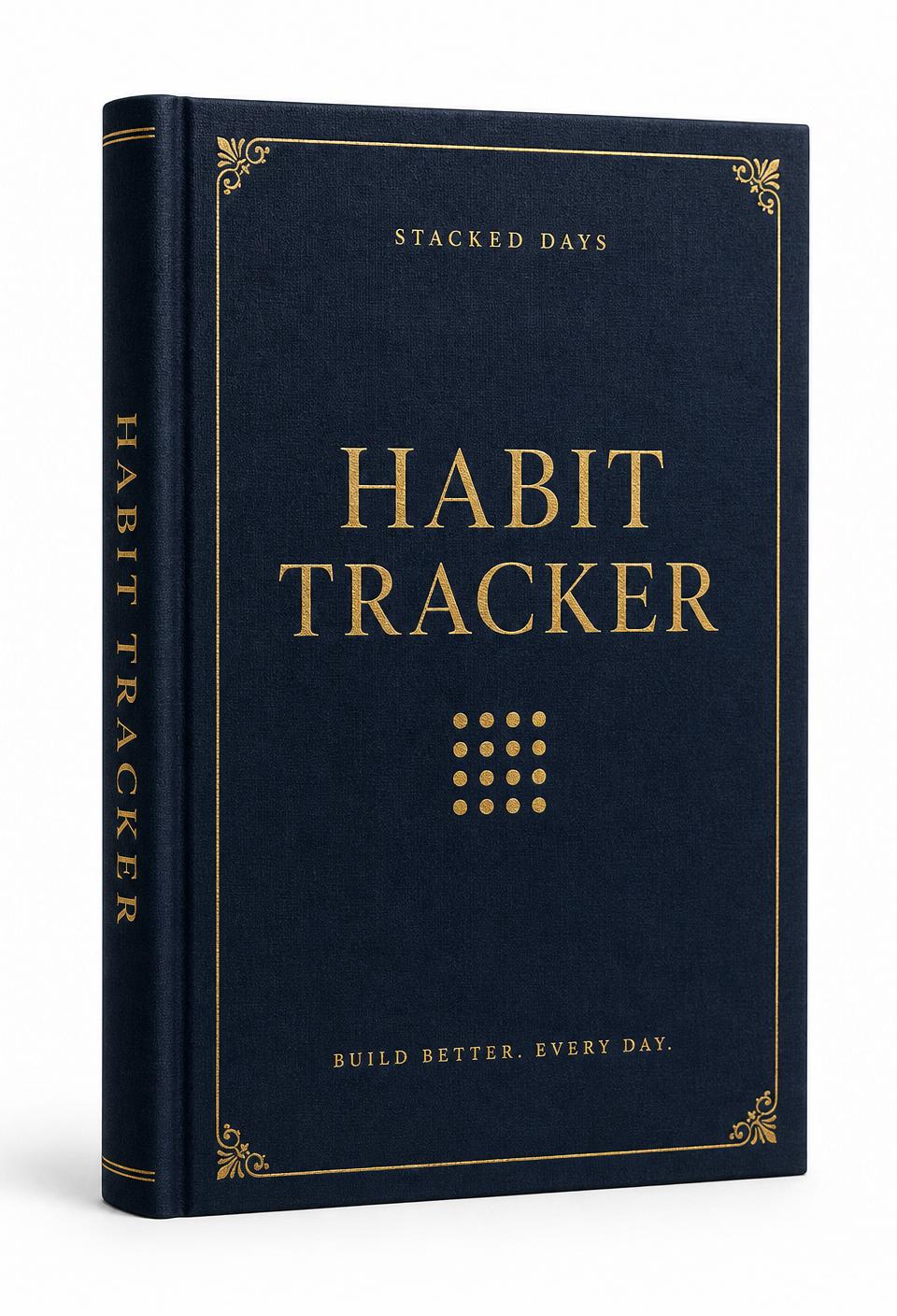
Our Habit Tracker is built on exactly these four rules — five-habit cap, binary boxes, weekly review prompt, and visual streaks that show momentum without shaming gaps.
Frequently asked
Questions readers ask
- How many habits should I track at once?
- Three to five. More than five and every habit competes with every other one for attention. Less than three and there's not enough momentum.
- Should I track a habit I've already mastered?
- Only for the first 60 days, as evidence. After that, retire it from the tracker — your attention is the scarce resource.
- What do I do when I miss a day?
- Mark it, move on, and never miss twice. One missed day is data; two in a row is a pattern you need to design around.
Author
The Stacked Days Team
We make slow-made digital journals, planners, and trackers for anyone choosing to live a little more on purpose.